Chronic pain at midlife is the theme for World Menopause Month. We went looking at what has been published on it in Maturitas, found four studies worth reading, and asked the authors to write about their own findings.
Endometriosis is filed under the reproductive years, which is why pelvic pain after menopause tends to be attributed to something else.
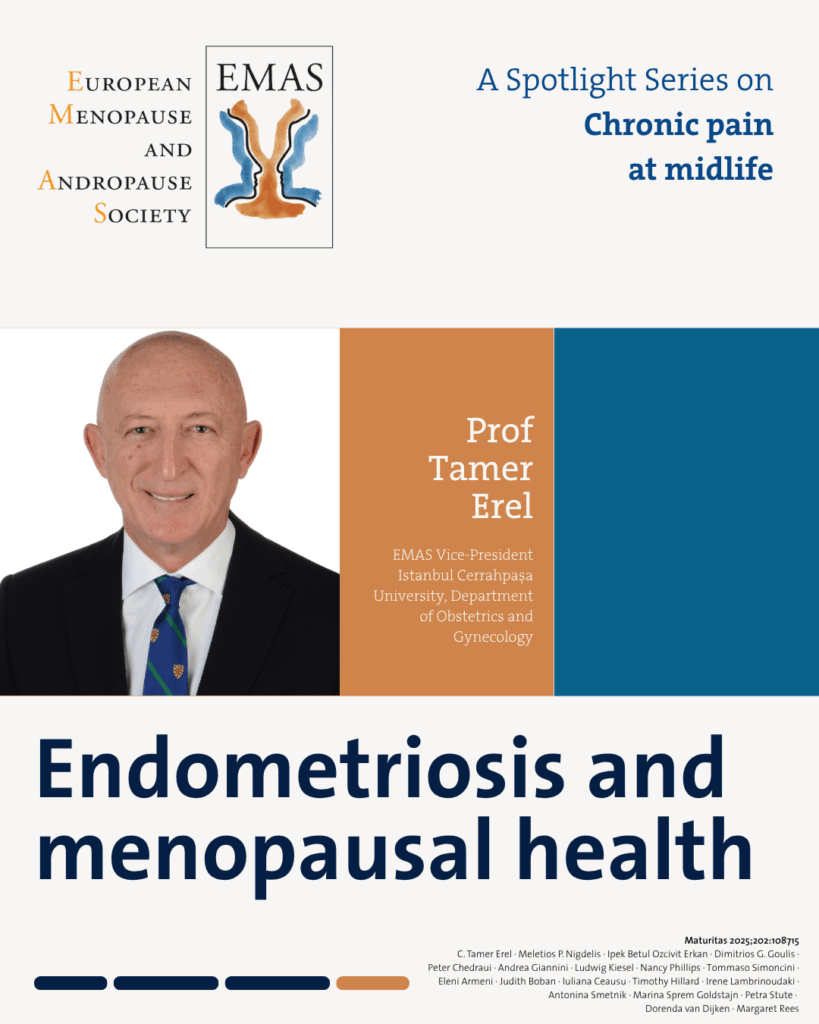
C. Tamer Erel, Istanbul University-Cerrahpaşa
Endometriosis is an estrogen-dependent, chronic inflammatory disease affecting approximately 10% of women of reproductive age. It is a frequent cause of chronic pelvic pain, and among women with chronic pelvic pain the prevalence can reach 75%. It also occurs during the perimenopausal period, in around 17% of cases, and after menopause, in around 3%.
After menopause
Endometriosis typically improves after menopause and the associated pelvic pain subsides as estrogen levels decline. The disease can also recur, or develop anew, for a number of reasons.
Early menopause occurs more frequently in women with endometriosis, whether because of the disease itself, the medications used to treat it, or surgery. That raises the risk of the long-term health problems associated with early or surgical menopause, including cardiovascular disease, osteoporosis, dementia and cognitive decline.
Endometriosis affects quality of life and sexual health. Even without early menopause, women with endometriosis have higher rates of osteoporosis and cardiovascular disease, and of conditions with an autoimmune basis: rheumatoid arthritis, systemic lupus erythematosus, Sjögren’s syndrome, autoimmune thyroid disease, celiac disease, inflammatory bowel disease, multiple sclerosis and migraine. An increased incidence of certain cancers has also been reported.
Managing symptoms
Where vasomotor symptoms are present, particularly hot flashes and the insomnia, anxiety and fatigue that come with them, or genital symptoms such as vaginal dryness and pain during intercourse, estrogen and progesterone-based menopausal hormone therapy can be given orally or transdermally. Even where the ovaries and uterus have been removed, combined estrogen and progesterone therapy can suppress potential new endometriotic foci and prevent chronic pelvic pain from developing.
For postmenopausal women with vaginal symptoms, moisturisers, lubricants, and vaginal creams, tablets, gels or capsules containing estrogen may be used.
Non-hormonal options exist for preventing vasomotor symptoms in women with a history of postmenopausal endometriosis. These include neurokinin receptor 1 and 3 antagonists and certain antidepressants.
Sexual dysfunction may stem from pain, or from low sexual desire and libido. It can arise from the endometriosis itself or follow from estrogen deficiency. Where libido is reduced, particularly in women with a history of endometriosis who have undergone surgical or early menopause, testosterone therapy may be appropriate.
If pain appears during hormone therapy
Chronic pelvic pain can develop during menopausal hormone therapy, and this calls for a pelvic examination. Radiological imaging can establish whether existing endometriotic foci have reactivated or new lesions have formed. This happens in women previously diagnosed with endometriosis, and in those on estrogen-only therapy after removal of the ovaries and uterus. Once the cause is identified, the pain can be treated surgically, medically, or both.
Reproductive history stays relevant after menopause, and endometriosis is worth keeping in the differential for pelvic pain well beyond the reproductive years.
Read the guide
Erel CT, Nigdelis MP, Ozcivit Erkan IB, et al. Endometriosis and menopausal health: an EMAS clinical guide. Maturitas. 2025;202:108715.


 powered by Borlabs Cookie